

Choosing a Ramp
The first thing to decide when choosing a ramp is what you require the ramp for. Is it to load a scooter/power chair into a vehicle or gain access to a building. Each scenario is listed in detail below.
Loading Ramps
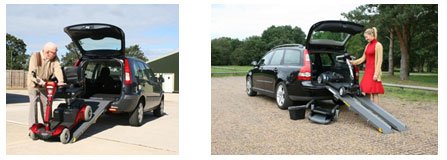
There are different options of ramps for loading 3 or 4 wheeled vehicles, they are:
3 Wheeled Scooters
To load a 3 wheeled scooter you will require a scooter ramp. This ramp is made up of two parts that fold to half their length, either with one hinge or two. They then butt together to form one flat panel, that you can run a 3 wheeled vehicle up. Channel ramps are not suitable, as there is nowhere for the front wheel to go.
4 wheeled scooters
To load a 4 wheeled scooter you can have either a scooter ramp or a channel ramp. For information on the scooter ramp see the 3 wheeled scooter section above. The channel ramp is made up of two pieces that fold to half their length. They are then placed parallel to each other at the correct distance for the vehicle’s wheels and then loading can begin. If you are not confident in using channel ramps, because of the positioning required, then a scooter ramp will be the better option.
Access Ramps
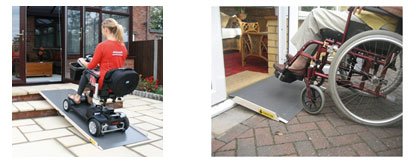
When deciding on a ramp for access to a building, the most important factor is the height of the step or steps that you need to overcome. The following gradients are suggested:
1:6 – For manual chairs with assistance, and power chairs
1:12 – For unassisted wheelchair users
The easiest way to work out the correct length of ramp that you require is to multiply the total step height by the gradient that applies above. This will give you the minimum ramp length you require.
For example If a power chair user needs to access a building with a 5″ (127mm) step. The suggested gradient is 1:6, so 5″ (127mm) X 6 (152mm) = 30″ (762mm). Therefore the ramp required needs to be a minimum of 30″ long. All weights and dimensions for the ramps can be found in the product details.
Be the first to know about our special offers, subscribe to our newsletter >>